

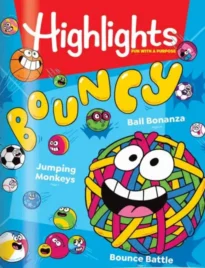
Receiving a personal envelope in the mail is a significant event for a child. It signals a moment of ownership and the start of a new adventure that exists outside of a glowing screen. For many families, this experience is synonymous with a specific yellow-bordered publication that has filled mailboxes for generations. The appeal lies in a consistent commitment to childhood curiosity, offering a mix of puzzles, stories, and activities that challenge the mind while providing a sense of accomplishment. This approach to media prioritizes the child as an active participant rather than a passive observer.
The value of high-quality print materials in the modern era cannot be overstated. While digital tools offer immediate gratification, physical magazines encourage a different kind of focus. They allow children to linger over a page, revisit a favorite story, or spend an entire afternoon perfecting a craft. By integrating screen-free engagement into a daily routine, parents can help their children develop a longer attention span and a deeper appreciation for the written word. This transition from digital noise to focused reading is a cornerstone of early childhood development.
Unlocking the Magic of Screen-Free Discovery for Children
One of the most recognizable features of these publications is the focus on visual puzzles. These are not merely games; they are carefully designed tools that support cognitive growth. When a child scans a complex illustration to find a hidden banana or a missing toothbrush, they are practicing visual discrimination. This skill is fundamental for reading, as it helps the brain distinguish between similar-looking letters like ‘b’ and ‘d’. Beyond the academic benefits, there is a profound sense of joy that comes from the ‘aha!’ moment when a difficult item is finally located.
The Enduring Appeal of Hidden Pictures
The Hidden Pictures section is perhaps the most iconic element of the magazine. It serves as a bridge between play and learning. For younger children, it introduces the concept of object permanence and spatial awareness. For older children, it builds persistence. It is common to see a child refuse to put the magazine down until the very last item on the list is checked off. This persistence is a vital trait that translates to schoolwork and other life challenges. The puzzles also provide an excellent opportunity for collaborative play, where siblings or parents can work together to solve the visual mystery.
Lessons in Kindness with Goofus and Gallant
Social development is another pillar of the content. Through the recurring adventures of two contrasting characters, children are presented with relatable social scenarios. One character often makes a selfish or thoughtless choice, while the other demonstrates empathy and responsibility. This format allows children to evaluate behavior in a safe, non-judgmental way. Instead of being lectured on manners, they observe the consequences of actions and the rewards of being a good friend. These stories facilitate social-emotional growth by giving parents a starting point for conversations about kindness and community.
Tailoring Content to Every Developmental Stage
Education is not a one-size-fits-all process. The needs of a toddler are vastly different from those of a pre-teen. Recognizing this, the range of available magazines is divided into specific age brackets to ensure the material is always challenging but never frustrating. For the youngest readers, the focus is on sensory experiences, simple rhymes, and sturdy pages that can withstand enthusiastic handling. As children grow, the complexity of the language and the depth of the subject matter increase accordingly.
- Monthly puzzles that build logic and reasoning skills.
- Stories that reflect a wide range of cultures and experiences.
- Craft projects that use common household items to encourage creativity.
- Science experiments that explain the natural world in simple terms.
- Reader-submitted poetry and artwork that celebrate young voices.
By providing literacy development that evolves with the reader, these magazines remain relevant throughout a child’s formative years. A preschooler might start by identifying colors and shapes, while a ten-year-old might use the same brand to learn about global history or the mechanics of a solar eclipse. This continuity builds a long-term love for reading that persists long after the child has outgrown the magazine itself.
Encouraging Scientific Inquiry and STEM
In recent years, there has been a significant push toward STEM (Science, Technology, Engineering, and Math) education. The magazine integrates these concepts seamlessly into its pages. Rather than presenting dry facts, it encourages active learning through hands-on activities. A child might be asked to build a simple bridge out of pasta or observe how water moves through a plant. These activities demystify complex scientific principles and make them accessible. When a child realizes they can conduct an experiment in their own kitchen, it removes the intimidation factor often associated with science and math.
The Role of Physical Media in a Digital Age
While many educational resources have moved online, the tactile nature of a magazine offers benefits that a tablet cannot replicate. Turning a page requires fine motor skills, and marking a puzzle with a pencil provides a sensory feedback loop that reinforces learning. Furthermore, a magazine does not require a battery or an internet connection. It can be taken on car rides, into the backyard, or tucked under a pillow for nighttime reading. This portability ensures that creative expression can happen anywhere at any time.
Moreover, physical magazines provide a break from the constant notifications and fast-paced editing of modern media. The static nature of a printed page allows the brain to process information at its own pace. This leads to better retention and a more relaxed state of mind. For children who may feel overwhelmed by the speed of the world around them, the predictable and gentle pace of a monthly magazine can be incredibly grounding. It offers a quiet space for cognitive skills to flourish without the pressure of a timer or a high-score leaderboard.
Fostering a Sense of Global Community
The content often features stories from around the world, introducing children to different traditions, foods, and languages. This exposure helps build problem-solving abilities in a social context, as children learn to navigate perspectives different from their own. By seeing children in other countries participating in similar activities or facing similar challenges, young readers develop a sense of global citizenship. This helps to reduce biases and encourages a more inclusive worldview from a very early age.
- Interactive ‘Check… and Double Check’ puzzles to sharpen observation.
- Recipe pages that encourage healthy eating and basic cooking skills.
- ‘Ask Arizona’ columns that address common childhood dilemmas with humor.
- Informative articles about animals and their natural habitats.
- Brain-teasing riddles that encourage linguistic play and lateral thinking.
Ultimately, the goal of these publications is to create a well-rounded individual who is curious about the world and confident in their ability to understand it. Through a combination of learning adventures and consistent educational themes, children are equipped with the tools they need to succeed in school and beyond. The magazine serves as a monthly reminder that learning is not just something that happens in a classroom; it is a lifelong pursuit that can be found in the simplest of places.
As families look for ways to enrich their children’s lives, the importance of high-quality, early literacy resources remains clear. Choosing a publication that respects the intelligence of children and encourages their natural desire to learn is a powerful investment in their future. For those interested in starting this journey of discovery, you can find more information about Highlights Magazine.