

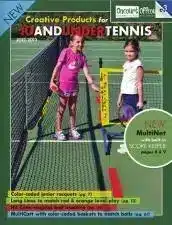
Tennis is a game of fine margins where the difference between a winning shot and an unforced error often comes down to muscle memory and technical precision. While traditional coaching provides the foundation, consistent improvement requires specialized tools that offer immediate feedback. Oncourt Offcourt Tennis equipment addresses the gap between instruction and execution, providing players with the means to refine their strokes even when a coach is not present. This approach to training focuses on sensory learning, allowing athletes to feel the correct motion and hear the rhythm of a well-timed strike.
Finding the right balance between power and control is a lifelong pursuit for many enthusiasts. By integrating targeted training aids into regular practice sessions, players can accelerate their development. These tools are designed to isolate specific movements, such as the wrist snap in a serve or the low-to-high path of a topspin groundstroke. The goal is to create a more efficient practice environment where every swing contributes to long-term skill retention. Whether working on footwork or racquet head speed, having the right gear makes a significant difference in how quickly a player reaches their potential.
Innovative Approaches to Mastering Tennis Mechanics
The evolution of tennis technology has moved beyond just racquet materials and string tension. Today, the focus has shifted toward how players interact with the ball. Training aids that emphasize visual cues and physical constraints help golfers and tennis players alike to stay within the ideal strike zone. For instance, tools that force a player to maintain a specific swing path can correct common flaws like ‘chopping’ at the ball or failing to follow through. This type of corrective training is essential for breaking bad habits that have become ingrained over years of play.
Developing Reliable Topspin and Ball Control
One of the most difficult skills for intermediate players to master is the consistent application of topspin. Without it, hitting the ball hard often results in it flying long. Training devices that simulate the ‘brushing’ motion required for heavy spin allow players to visualize the physics of the shot. When a player can see a training ball spin rapidly in response to their swing, it reinforces the technical adjustment needed to keep the ball in play. This visual feedback is far more effective than verbal instructions alone, as it connects the physical sensation of the hit with the resulting ball flight.
Using portable spin trainers or stationary hitting stations provides a controlled environment to work on these mechanics. Instead of chasing balls across the court, a player can focus entirely on the point of contact. This repetition builds the neuromuscular pathways necessary to execute the shot under pressure during a match. Over time, the motion becomes second nature, allowing the player to focus on strategy rather than mechanics.
Enhancing Footwork and Agility on the Court
Tennis is often described as a game played with the feet. Even the most perfect stroke will fail if the player is out of position. Agility ladders, cones, and specialized court markers are vital for developing the ‘split step’ and the explosive lateral movement required to cover the baseline. Training with these tools encourages players to stay on the balls of their feet, improving their reaction time and balance. Consistent footwork drills ensure that a player can reach the ball early, giving them more options for their return shot.
- Agility Ladders: These help in developing quick, precise foot movements and improving coordination.
- Court Targets: Using physical markers on the court helps players aim for specific zones, improving depth and accuracy.
- Resistance Bands: These are excellent for building the core strength and explosive power needed for a dominant serve.
- Reaction Balls: These unpredictable bouncing balls sharpen hand-eye coordination and reflex speed.
The Science of Multi-Sensory Tennis Training
Effective training often involves engaging more than just the sense of sight. Auditory and tactile feedback play a massive role in how athletes learn. For example, the sound of a clean hit on a small-holed training racquet can tell a player immediately if they have missed the ‘sweet spot.’ This instant correction is vital for refining accuracy. When a player hears the difference between a framed shot and a centered one, they subconsciously adjust their swing to replicate the successful sound.
Tactile feedback is equally important. Some training aids use weighted racquets or resistance devices to help players feel the weight of their swing. This helps in developing a smooth, fluid motion rather than a jerky or forced movement. By slowing down the swing and feeling the resistance, players can identify where their form is breaking down. This methodical approach to training ensures that every aspect of the stroke is optimized for maximum efficiency and power.
Maximizing Practice Time with Efficient Tools
For many players, time on the court is limited. This makes it crucial to maximize the efficiency of every practice session. Utilizing ball machines or self-feeding devices allows for a high volume of hits in a short period. However, simply hitting balls is not enough; the practice must be intentional. Using targets and specific goals for each session prevents mindless hitting and ensures that the player is actually working on their weaknesses. This structured approach is what separates those who play for years without improvement from those who see steady progress.
Incorporating variety into practice is also key to maintaining focus. Switching between baseline drills, net play, and serving practice keeps the mind engaged. Specialized equipment that can be easily set up and moved makes it possible to create a comprehensive training circuit even on a single court. This versatility is a hallmark of high-quality tennis gear, allowing it to serve players from the junior level all the way to competitive adults.
Choosing the Right Equipment for Your Skill Level
Not every training aid is suitable for every player. Beginners benefit most from tools that help with basic contact and swing paths, while advanced players might look for equipment that helps with fine-tuning spin or increasing serve speed. It is important to assess where your game currently stands and what specific area needs the most attention. Investing in a few high-quality, versatile tools is often better than buying a large number of niche gadgets that may only be used occasionally.
Durability is another factor to consider. Tennis equipment takes a lot of abuse, from being hit by balls to being dragged across abrasive court surfaces. Choosing gear made from high-grade materials ensures that it will last through thousands of repetitions. This longevity is essential for tools that are meant to be part of a long-term training regimen. Quality equipment provides consistent performance, which in turn leads to more consistent results on the scoreboard.
Building a Comprehensive Home Training Setup
Many tennis players are now looking for ways to practice at home when they cannot get to a court. Portable nets, rebounders, and swing simulators make it possible to work on technical aspects of the game in a driveway or backyard. These setups are excellent for staying sharp during the off-season or between matches. Even fifteen minutes of focused practice at home can help maintain the muscle memory developed during full court sessions.
Ultimately, the goal of any training aid is to build confidence. When a player knows they have put in the work and refined their technique using the best tools available, they step onto the court with a mental edge. They can trust their strokes and focus on the tactical side of the match, knowing that their mechanics are sound. This combination of physical preparation and mental readiness is the key to success at any level of the game. To find the best equipment to support your journey toward becoming a better player, explore the options available at Oncourt Offcourt Tennis.